Chain Styles Explained: Cuban, Figaro, Franco, Rope & More
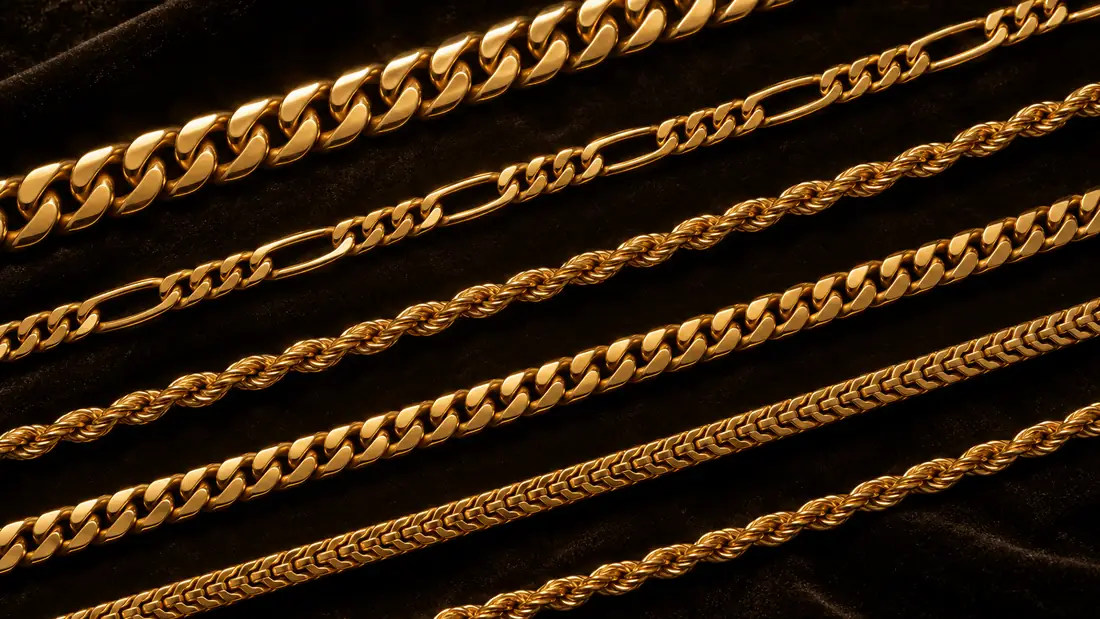
Two chains of identical length and metal can feel like completely different jewelry. The link pattern determines flexibility, weight, how light catches the surface, and how the piece wears over time. Knowing five or six styles by name turns overwhelming product pages into a five-second decision.
Daily-wear chains want durable, snag-proof links: Franco, box and Cuban top that list - their flat or woven profiles resist catching on clothing. Rope chains flex beautifully but thin versions can kink; buy rope at 2mm or wider. Herringbone, gorgeous and flat, is the most delicate - it kinks permanently if bent, so it is a careful-wearer's chain, not a gym-bag chain.
The same Cuban link reads completely different at 3mm versus 8mm. Under 3mm, chains read subtle and layer well. 4-6mm is the everyday statement zone. 7mm and above is the bold tier - the chain becomes the outfit's focal point. Width also drives price steeply on solid gold, since material weight scales with it.
Whatever the link style, check two build details: the clasp (lobster clasps outlast spring rings; the clasp is where chains die) and whether links are soldered. Soldered links will not open and snag; unsoldered fine chains can. A quality chain names its clasp type and construction without being asked.
If you buy a single chain, the most versatile choice is a 20-22 inch Cuban or Franco in the middle widths (4-5mm): it layers under an open collar, stands alone on a t-shirt, and carries a pendant when you want one. Add a herringbone or rope later for variety, and the two-chain rotation covers nearly every occasion.
Buy the link for the life you live - the style that survives your day is the style that suits you.
Pendant wearers should match link scale to pendant scale: a dainty birthstone pendant sits naturally on a cable or box chain under 2mm, while a statement locket needs a 3mm+ chain that will not be visually swallowed. The bail (the loop connecting pendant to chain) matters too - thick chains need large bails to hang and move freely. When a listing shows a pendant chain, that pairing is already solved; when buying separately, match bail width to chain width.
Flat styles (Cuban, herringbone, box) have a right side and want to lie flat against the chest; they rotate less when sized correctly. Round profiles (rope, wheat, ball) are rotation-indifferent and never look wrong from any angle. If a flat chain keeps twisting, it is usually one size too long - the extra length lets it turn. Shorter or properly sized, flat chains stay put.
The minimal versatile setup: one smooth, flat everyday chain (Franco or Cuban, 4-5mm, 20-22 inches) and one textured contrast piece (rope or wheat, thinner, for layering days). The first handles ninety percent of wear; the second covers the days you want visible texture. Everything beyond two chains is taste, not necessity - and taste built on two well-chosen pieces beats a drawer of compromises.
Browse our gold and silver chain collections - every link style explained on its product page.
Standalone chains can prioritize texture and light-play - rope and wheat shine there. Pendant chains prioritize stability: flat, smooth links (box, cable, Franco) keep the pendant facing forward instead of rotating it around the neck. If your pendant flips constantly, the chain is the culprit: switch to a flatter link or a slightly shorter length, and the pendant stays put.
Chain weight is feel as much as look: a 6mm solid Cuban has real heft that some wearers love and others notice all day. Hollow-link construction delivers the same visual width at a fraction of the weight - common in larger gold chains - at some cost in durability. If you are new to heavier styles, try a hollow or thinner version first; the style reads the same from across a room while your neck decides whether the solid version suits your days.
Ready to get to work? Shop the collection - free US shipping, tax free.