Gold vs. Silver: How to Choose Your Metal
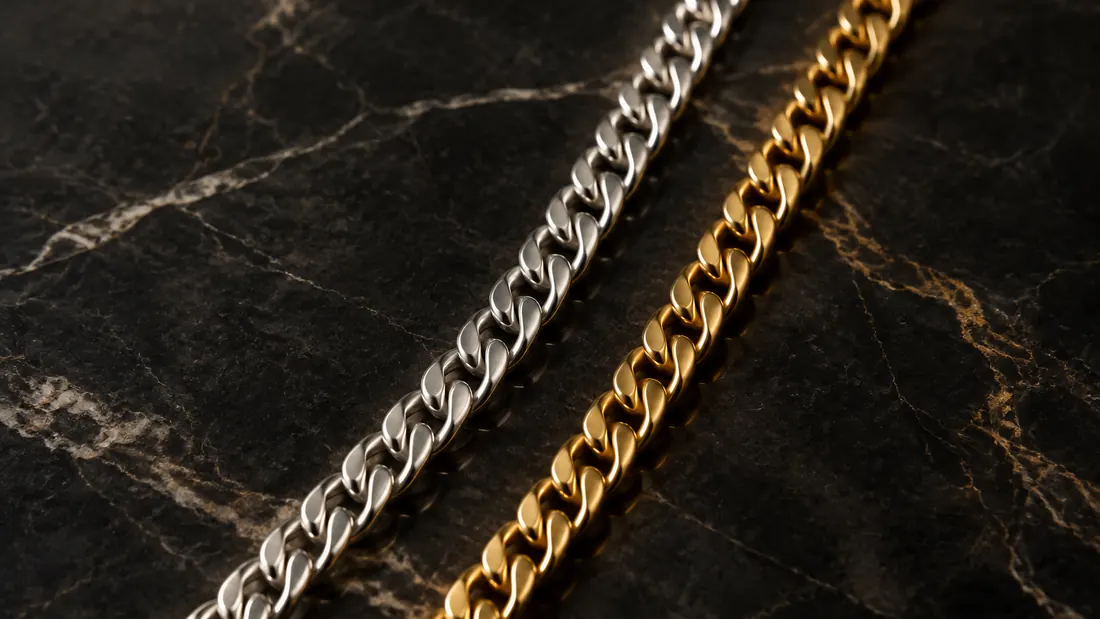
The classic advice holds up: warm undertones (veins look green, gold jewelry glows against the wrist) harmonize with yellow gold; cool undertones (blue veins, silver flatters the wrist) harmonize with white metals. Neutral undertones - most people - can wear both. Test in daylight with the jewelry you already own: which metal makes your skin look clearer, and which makes it look sallow? That answer outweighs any rule.
Your closet probably leans one way already. Warm palettes - olive, camel, cream, earth tones - pair naturally with gold. Cool palettes - black, grey, navy, white - pair with silver. And since jewelry should match the clothes you actually wear five days a week, your wardrobe is a better guide than your wrist. If your closet is half and half, so is your jewelry box; there is no law against both.
Gold's softness scales with purity: 24k is nearly pure and bends easily, while 10k-14k alloys are noticeably harder and take daily abuse better. Sterling silver (92.5% silver) is reasonably durable but softer than gold alloys - it scratches more readily and, its famous quirk, tarnishes. Neither metal rusts; both outlast fashion jewelry by decades. For a daily-wear chain, 14k gold or sterling silver are both proven workhorses.
Gold's price tracks the metal market - even a thin 14k chain carries real material cost, which is why gold chains start around $100 and climb steeply with weight. Silver delivers the same visual presence for a fraction of the price: most sterling chains land between $15 and $60. The practical read: silver lets you own five chains for the price of one gold, while gold is the buy-once, wear-forever purchase.
Silver tarnishes - a chemical reaction with sulfur in air and sweat - but the fix is easy: a polishing cloth restores shine in seconds, and proper storage (anti-tarnish pouches, dry places) slows the process dramatically. Gold does not tarnish; it just needs the occasional wash with mild soap and water. If you want jewelry you can ignore for a month, gold wins. If you do not mind sixty seconds of monthly polishing, silver rewards you on price.
Plenty of modern styling mixes metals deliberately - a gold pendant on a silver chain, or stacked chains alternating white and yellow. The old 'never mix metals' rule has retired. If you genuinely love both, buy both and wear them together; the contrast reads intentional when the styles rhyme.
Choose the metal you reach for without thinking - that instinct is your undertone, wardrobe and lifestyle talking at once.
Gold purity is measured in 24ths: 24k is pure gold, 18k is 75% gold, 14k is 58%, 10k is 42%. Lower karats trade purity for hardness - which is why everyday chains cluster at 10k-14k, while 18k-24k pieces are softer and richer in color. For a chain worn daily, 14k is the durability sweet spot; for special-occasion pieces, 18k's deeper gold tone justifies its softer nature.
Nickel in some metal alloys causes reactions for a minority of wearers. Sterling silver is hypoallergenic for most; 14k+ gold contains too little reactive metal to bother most people. If your ears or neck react to fashion jewelry, the culprit is usually nickel in plated base metals - and the fix is exactly what this guide recommends anyway: solid sterling or 14k gold, where the metal is the same all the way through, not a plating that wears through to whatever is beneath.
Still torn? Try this: open your closet and count warm-toned clothes versus cool-toned. Then look at your watch, belt buckle and the hardware on your favorite bag - you have already been voting with your accessories. Most people discover they have been a gold or silver person all along, and their jewelry box simply had not caught up yet.
Browse our silver chains and gold chains collections - both metals, honest prices, free US shipping.
If you genuinely cannot choose, two-tone jewelry exists for exactly this: chains that alternate gold and silver links, or pendants in both metals on a single chain. A bridge piece lets one necklace work with either metal family in your wardrobe, which is why jewelers keep making them. Start with one mixed piece and your gold and silver collections can grow independently around it.
Metals age differently over years, not months. Silver's tarnish is permanent only if ignored - a decade-old sterling chain polished monthly looks new, while one abandoned in a drawer needs a professional bath. Gold's finish never dulls but its surface records scratches; a 14k chain after five years shows the soft sheen of honest wear. Neither failure mode is fatal, and both metals reward the same habit: wear them, wipe them, store them dry.
Ready to get to work? Shop the collection - free US shipping, tax free.